


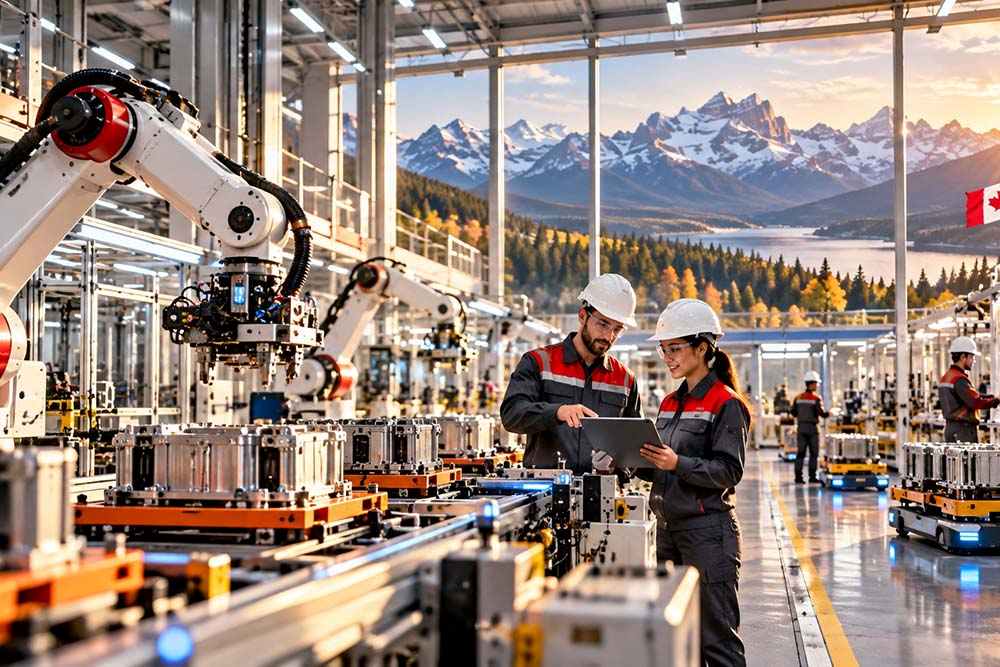


The idea of a manufacturing “comeback” is compelling because it suggests a return to an earlier era of large plants and expanding industrial employment. The more interesting story, however, is not a return to the past. It is the emergence of a different manufacturing model — one built around connected equipment, flexible automation, data and highly skilled teams. AI and Industry 4.0 technologies are part of that shift, but their value depends on how they are applied to real production problems.
Productivity begins with visibility
Manufacturers cannot improve what they cannot see. Connected machinery and production systems can capture information about cycle times, downtime, defects, energy use and maintenance events. That visibility creates a more precise conversation about performance. Instead of debating why a line “feels slower,” teams can identify where time is being lost and test improvements.
AI can extend that capability by helping analyze patterns that would be difficult to detect manually. Maintenance teams, for example, may use equipment data to identify signs of deterioration before a failure. Quality teams may use image analysis to flag defects earlier. Planners can compare demand signals with capacity. These are practical applications because they support decisions already being made inside the plant.
Automation is becoming more flexible
Older automation projects were often associated with high-volume, repetitive production. Newer systems can be more adaptable, making automation relevant to businesses with changing product mixes or shorter runs. Collaborative robots, machine vision and configurable software can support workers rather than simply replace entire roles.
This matters in environments where skilled labour is difficult to recruit or where repetitive tasks create safety and ergonomic concerns. Automation can shift people toward setup, quality, maintenance and problem-solving. The productivity gain comes not only from speed but from using human attention where it adds more value.
The hardest part is often integration
Manufacturers rarely start with a blank factory. They have equipment purchased in different years, software from multiple vendors and processes that evolved. Industry 4.0 projects therefore face an integration challenge. Data may exist in different formats. Older machines may not communicate easily. Employees may have developed manual workarounds that are not documented.
Successful modernization usually begins with a focused use case rather than an attempt to connect everything at once. A plant might start by monitoring a bottleneck machine, digitizing quality records or improving production scheduling. The project can then be expanded if the business impact is clear.
Skills will define the return on technology
Smart equipment does not create a smart factory on its own. Employees need to understand the process, interpret information and respond to what the technology reveals. That raises the importance of cross-functional skills. Maintenance teams increasingly need digital knowledge. Production managers need comfort with data. IT teams need a better understanding of operational technology.
Leadership must also create room for experimentation. Not every pilot will produce a large return, and teams need permission to refine the approach without treating every adjustment as failure.
Canada’s manufacturing opportunity will be shaped by more than technology, including energy, trade, capital and workforce conditions. Still, AI and Industry 4.0 can help producers make existing resources more productive and operations more resilient. The strongest “comeback” will not be measured by how closely factories resemble those of the past. It will be measured by whether Canadian manufacturers can build flexible, competitive operations suited to the demands of the next decade.
Measure modernization in operating terms
Technology projects should be judged against outcomes that matter to the plant. Reduced scrap, shorter changeovers, higher equipment availability, improved schedule adherence and safer work are more meaningful than the number of connected devices. Establishing a baseline before implementation gives management a way to evaluate whether the project is creating value. It also makes future investment decisions easier because the organization develops evidence about where automation and AI produce the strongest return.


