


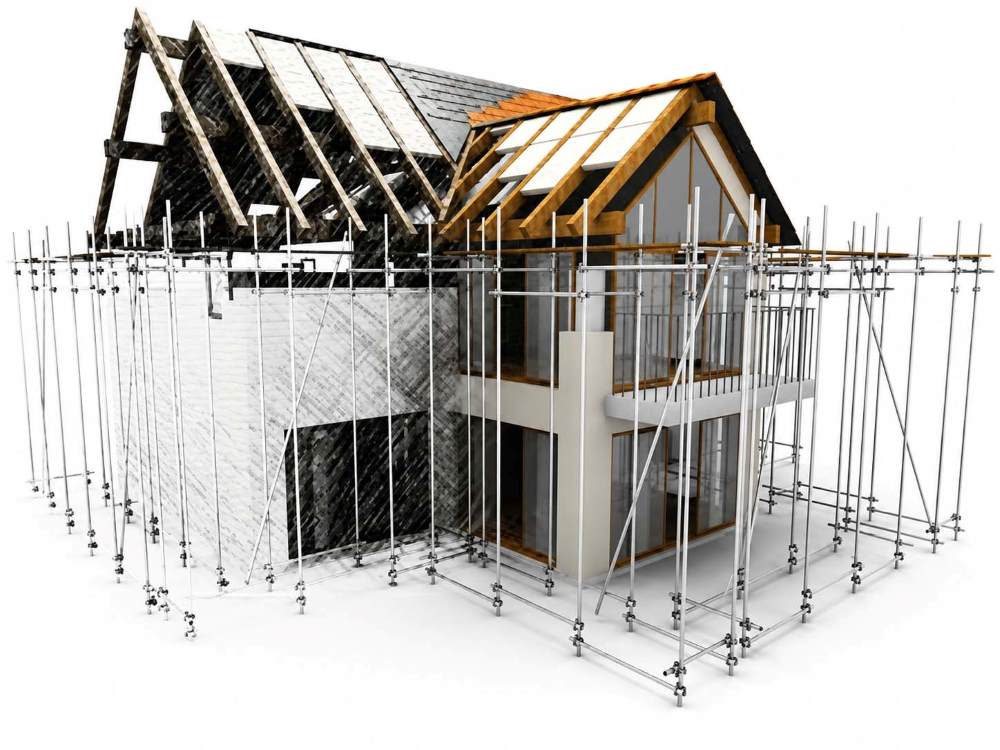


Ontario’s real estate market faces a contradiction. The province needs more homes, yet high construction costs, expensive financing, limited infrastructure, and weak project economics can delay projects intended to improve affordability. Buyers and renters need lower costs, while builders need projects that can attract capital. The future depends on creating smarter communities where housing, transit, services, employment, and environmental resilience are planned together.
Supply Must Match Real Needs
Ontario has maintained a target of building 1.5 million homes over ten years. Recent activity is encouraging: from January through May 2026, the province recorded 26,084 housing starts, including sharply higher rental construction than in 2025. However, progress should not obscure the challenge. Canada Mortgage and Housing Corporation estimates that restoring national affordability to 2019 levels would require between 430,000 and 480,000 new homes annually for a decade.
More supply is necessary, but type matters. A market can add luxury condominiums while families, students, and essential workers remain unable to find suitable homes. Ontario needs purpose-built rentals, affordable ownership, supportive housing, family-sized units, student residences, and smaller homes for Adults. Housing policy should measure whether new construction serves local incomes and household needs, not merely visible construction.
Building Around Transit
Transit-oriented development is central to smarter growth. Infrastructure Ontario’s Transit-Oriented Communities program aims to combine higher-density housing, employment, retail, and public amenities near subway, light-rail, and GO Transit stations. The program could unlock up to 340,000 homes along transit corridors.
This model can reduce commuting costs, lower car dependence, and make better use of public infrastructure. Yet density alone does not create a complete community. Developments also require schools, childcare, healthcare, parks, grocery stores, accessible streets, and spaces for local businesses. Without these elements, governments may produce housing near transit while leaving residents dependent on long daily trips.
Reducing the Cost of Construction
Ontario and the federal government have introduced measures intended to lower development costs, including tax relief for qualifying purpose-built rental housing and a 2026 development-charge reduction program. Lower upfront costs can improve project feasibility, especially when borrowing and material expenses remain high.
Still, cost reductions should come with accountability. If governments waive taxes or charges, residents should receive measurable public value through lower rents, additional units, faster construction, or long-term affordability commitments. Subsidies that merely improve developer margins without changing outcomes will weaken public trust.
Smart Technology, Smarter Planning
Smart development also involves better use of data and technology. Digital permitting can shorten approval times, shared infrastructure maps can reveal servicing constraints, and building information modelling can reduce design conflicts before construction begins. Modular and prefabricated construction may improve consistency and reduce timelines where projects are standardized appropriately.
Technology, however, cannot solve unclear rules or political indecision. A faster digital portal will not help when zoning is contradictory, infrastructure funding is uncertain, or departments provide conflicting direction. Municipalities and provinces must simplify processes before automating them.
Affordability Requires Long-Term Protection
New affordable units can gradually become unaffordable unless agreements protect rents over time. Ontario’s current National Housing Strategy action plan prioritizes rent-assisted housing and an expansion of supported units. Such programs are essential because market supply alone will not meet the needs of households with very low incomes.
Non-profit housing providers, co-operatives, municipalities, Indigenous organizations, and community land trusts should be treated as permanent development partners. They can hold land and housing for community benefit beyond the cycle of private investment. Public land should also be evaluated for housing before being sold solely to the highest bidder.
The Regional Dimension
Ontario’s housing crisis differs by location. Toronto faces high land prices and density pressures, while northern and rural communities may struggle with labour shortages, limited rental stock, aging infrastructure, and construction costs that exceed local property values. Identical policies will not work everywhere.
Smaller municipalities need technical support, predictable infrastructure funding, and flexible programs. Housing growth must also be tied to water, roads, broadband, healthcare, and transportation. Approving homes without expanding local capacity simply transfers the shortage into another public service.
Defining Smart Growth
The future of Ontario real estate will be decided by whether governments and industry can move beyond the false choice between affordability and quality. Smart development should produce more homes, but also shorter commutes, lower energy costs, accessible design, resilient infrastructure, and stronger neighbourhoods.
Success should be measured through completed homes, construction speed, rent-to-income ratios, infrastructure readiness, and resident satisfaction. Ontario does not need development for its own sake. It needs communities where people can afford to live, work, raise families, and remain as their needs change. This applies across Ontario’s diverse communities. The defining question is not how quickly the province can build. It is whether what gets built will remain useful, inclusive, and affordable for generations.


