


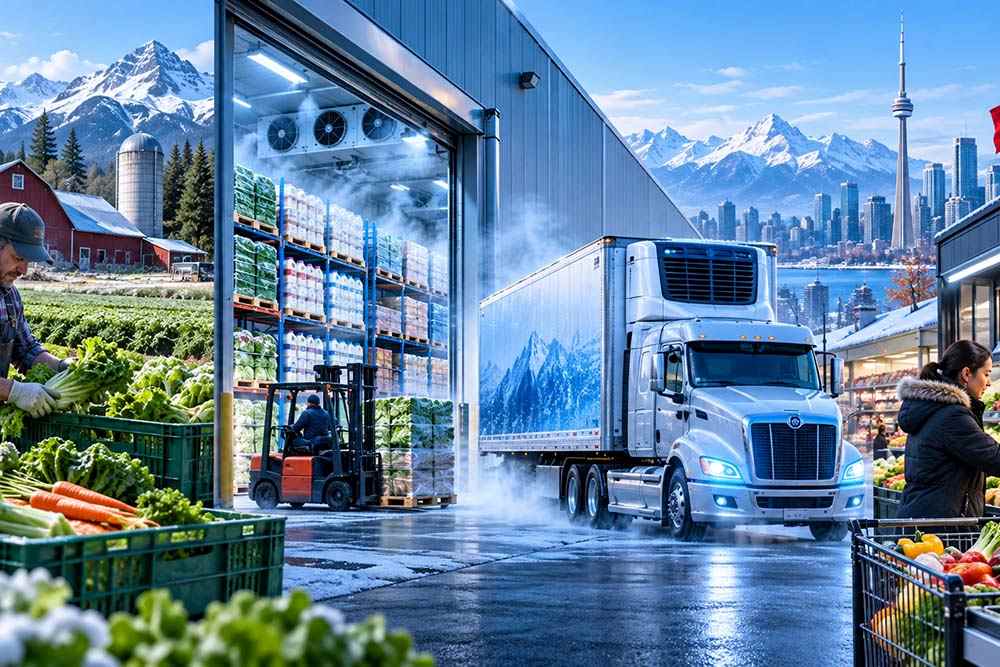

Food can travel through several businesses before it reaches the consumer, and for temperature-sensitive products the journey is unforgiving. A refrigerated item may move from producer to processor, cold storage, transportation, distribution and retail. At each step, the condition of the product depends on controlled temperature, disciplined handling and reliable information. Cold chain logistics is therefore not merely transportation with refrigeration. It is a continuous quality-management system.
The chain is only as strong as the handoff
A product can remain within the correct temperature range for most of its journey and still be compromised during a short loading delay. Handoffs between facilities deserve particular attention because responsibility can become unclear. Who verifies product temperature before loading? How long can pallets remain on the dock? What happens if a receiving appointment is delayed?
Written procedures and clear responsibility reduce ambiguity. Businesses should define acceptable ranges, inspection steps and escalation protocols before a problem occurs. This makes it easier to act quickly when a shipment falls outside normal conditions.
Monitoring creates greater visibility
Temperature loggers, connected sensors and telematics can provide a more detailed record of conditions during transit and storage. This information helps operators identify where deviations occurred and whether a problem is isolated or recurring.
Data should be used for improvement, not simply archived. If a particular route, trailer or loading practice produces repeated temperature events, the pattern can guide corrective action. Strong cold chain management combines technology with operational review.
Capacity and timing matter
Refrigerated logistics has physical constraints. Cold-storage space, reefer equipment, dock capacity and qualified carriers may be limited during peak periods. Producers and processors need to plan around those constraints rather than assuming capacity will always be available on short notice.
Forecasting can help businesses book transportation earlier and align production with receiving schedules. Communication between shippers, carriers and receivers becomes especially important when weather or congestion disrupts timing. The product may still be safe, but delays can shorten remaining shelf life and affect its commercial value.
Food protection and cost control can align
Maintaining the cold chain requires investment, but failure creates waste. Spoiled product, rejected loads, claims and emergency replacement shipments all carry financial consequences. Businesses should evaluate cold chain costs against the value of reducing these losses.
Packaging, pallet configuration and route design can also influence efficiency. Better insulation may reduce risk. Improved loading can support airflow. Consolidating shipments may lower cost but increase dwell time. Each decision should be considered in the context of the product’s sensitivity and service requirements.
Canada’s food supply depends on thousands of successful handoffs every day. Cold chain logistics protects more than temperature; it protects quality, shelf life, customer confidence and the economic value created earlier in the food system. The most reliable operations treat temperature control as a shared responsibility from farm to market. When monitoring, procedures and communication work together, the cold chain becomes a source of resilience rather than a hidden vulnerability.
Traceability strengthens the response
When a temperature issue occurs, speed matters. Businesses need to know which product was affected, where it travelled and which customers received it. Lot tracking, shipment records and clear chain-of-custody information can narrow the scope of an investigation and reduce unnecessary disposal. Traceability also supports learning after the event because teams can compare the affected shipment with normal ones and identify what changed. In this way, recordkeeping is not an administrative burden; it is part of protecting both food and business continuity.
People remain central to temperature control
Sensors can record conditions, but employees make many of the decisions that protect the product. Drivers, receivers, warehouse teams and supervisors need clear training on door-open time, loading practices, temperature checks and escalation. A strong cold chain creates a culture in which an unusual reading is investigated rather than ignored. Technology supports that culture; it cannot replace it.


