


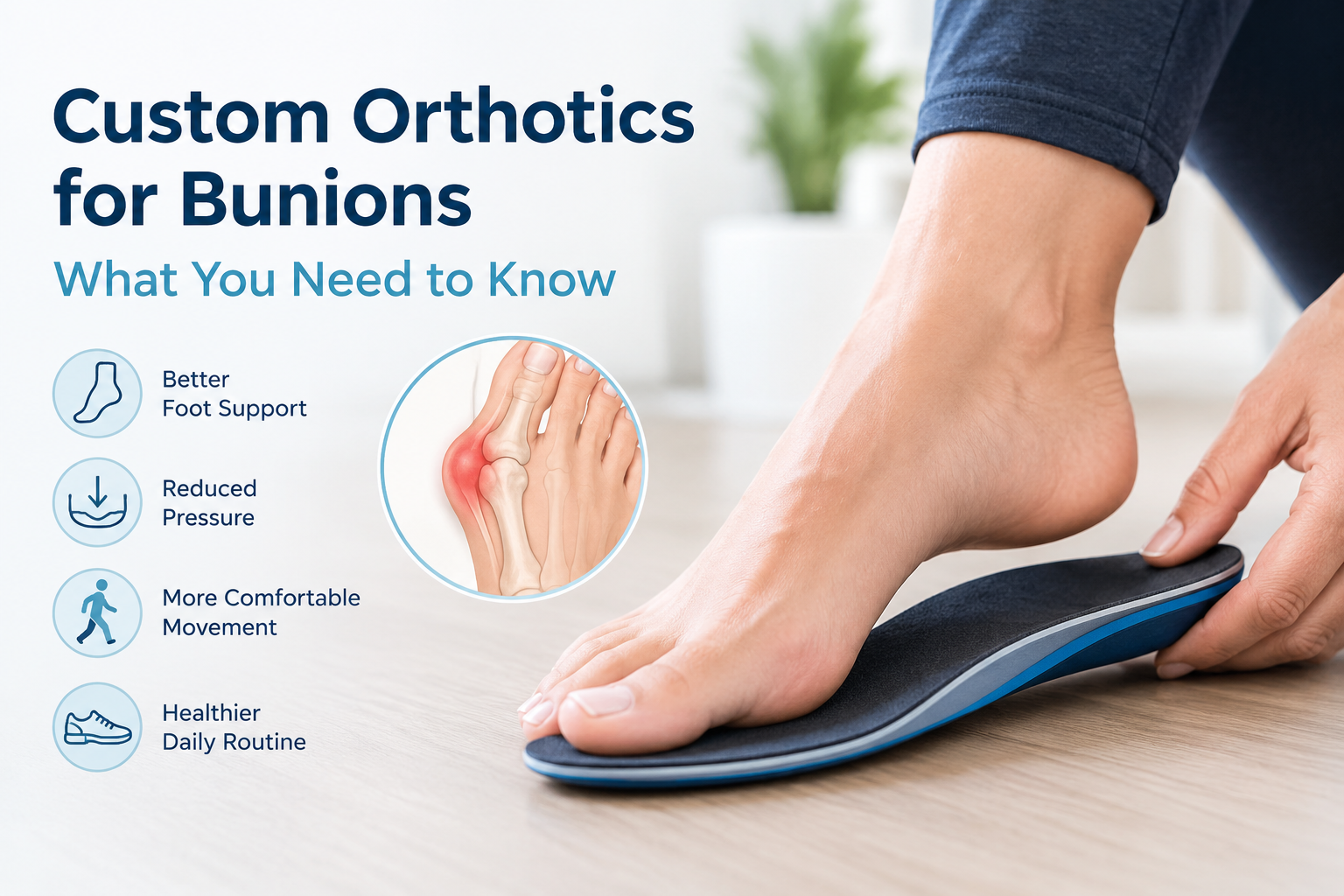


It usually starts small. A little bump near your toe, nothing you’d think twice about. Then your shoes start rubbing against it or feeling tighter than they used to. That’s usually the tell. Left alone, the swelling, stiffness, and pain start piling on until walking itself becomes a bit of a struggle. If any of this sounds familiar, that’s your cue to start looking into Custom Orthotics Brampton.
Now, an orthotic isn’t going to make a bunion disappear. And no, not everyone needs one. What it actually does is simple: it supports your foot and shifts how pressure lands when you’re standing or walking. Does that help? Depends. On your feet, on what’s driving the pain to begin with, even on the shoes you wear day to day.
What Is a Bunion and Why Does It Hurt?
A bunion isn’t something that shows up overnight. It’s your big-toe joint slowly drifting out of alignment, the toe leaning in toward its neighbors while that joint pushes outward along the inside edge of your foot.
And oddly enough, the bump itself often isn’t the real problem. It’s everything that comes with it. Your shoe rubs against that raised joint, day after day, until you’re dealing with redness, swelling, soreness, maybe some irritation that just won’t quit. Stiffness creeps in for some people. Others get calluses or corns. And then there’s the shoe-shopping struggle, where nothing quite fits right anymore.
Bunions can have several contributing factors. Foot structure, family history, joint flexibility, injuries, foot mechanics, and poorly fitting footwear may all play a role.
How Your Foot Mechanics Can Affect Bunion Discomfort
Walking puts force through your heel, arch, forefoot, and toes, step after step. When one of those parts isn’t pulling its weight, another one usually takes over.
That’s often what an assessment is looking for: your foot position, arch, how you walk, where pressure builds up, range of motion, and your footwear. A chiropractor might come into the conversation. But let’s be clear: having a bunion doesn’t automatically mean you need chiropractic care.
The real goal here is understanding what’s actually going on, not just treating the bump you can see. Sometimes it’s your foot mechanics driving the symptoms, and for some people, the right kind of support can make a real difference in how pressure gets distributed.
How Can Custom Orthotics Help With Bunions?
Custom Orthotics for Bunions are made with a person’s feet and needs in mind rather than being taken from one standard mould. After an assessment, the support may be shaped to help the arch, spread pressure, or make certain movements more comfortable.
For someone with a painful bunion, an orthotic may help by:
- Taking some pressure off a tender spot.
- Supporting the arch and foot during movement.
- Improving pressure distribution while standing or walking.
- Supporting more comfortable foot mechanics.
- Helping accommodate individual differences in foot structure.
There is one thing worth keeping clear. A bunion is a structural change. An insert cannot simply push an established bunion back into place. What it may do is help your foot deal with pressure in a different way and make certain activities more comfortable.
Are Custom Orthotics Different From Store-Bought Insoles?
A store-bought insole usually comes in a standard shape and size. It can be perfectly useful for general cushioning or basic support. The problem is that they are not made around your particular feet.
Custom-made orthotics are made after considering things such as foot structure, symptoms, activity level, shoes, and movement. Depending on the assessment, measurements, casting, or a digital scan may be used.
That doesn’t mean custom is automatically the answer, either. Sometimes a roomier shoe or a decent over-the-counter insole does the trick, and that’s genuinely enough for some people.
Custom foot orthotics may be considered when a more individual type of support is needed, particularly when simpler changes have not helped enough.
What to Expect Before Getting Custom Orthotics
A proper assessment should involve more than standing in a room and picking an insert.
- First, you will discuss the problem. You’ll probably get asked a handful of questions to start: where it hurts, when it kicks in, which shoes trigger it, and whether it’s messing with your work, your workouts, or just getting around during the day.
- Next, the feet are examined. The professional may look at your arch, foot shape, big-toe movement, range of motion, tender areas, and places where pressure is building up.
- Movement may also be assessed. Watching you move can show how your feet are working when they are actually doing their job, rather than only when you are sitting or standing still.
- Your footwear matters, too. If the toe area is too tight or the shoe offers little support, that may be contributing to the problem.
Once the assessment is finished, the professional can decide whether an orthotic is actually worth trying. Not everyone with a bunion needs one. A proper assessment should make that clear as well. There is no reason to spend money on an insert that does not deal with the problem you actually have.
What Can Orthotics Do for Bunion Pain?
For some people, Custom orthotics for bunion pain may take some pressure away from uncomfortable areas and make everyday movement easier. Orthotics for bunions can also be made with the person’s own foot mechanics in mind, rather than using exactly the same support for everyone.
Bunion orthotics may be useful when pressure distribution or arch support appears to be contributing to discomfort. However, results vary. One person may notice a real difference when walking, while another may find that an orthotic does very little.
Really, it comes down to something practical. A good orthotic should make everyday things easier: standing through a long workday, walking around the block, getting a workout in, or just wearing your shoes without the bunion being on your mind the whole time.
Why Do Your Shoes Matter as Much as Your Orthotics?
A great orthotic can’t undo a bad shoe. If it’s still pressing on the bunion, the discomfort doesn’t just go away, no matter how well the insert itself was designed.
Look for footwear with:
- Enough room around the toes.
- A wider, comfortable toe box.
- Cushioning that feels comfortable.
- Stable support.
- No seams or edges that rub the bunion.
- A comfortable fit for your usual activities.
This becomes even more important if you stand or walk for hours. Foot support for bunions is not much help if the shoe is creating pressure at the same time. A wider toe area and a lower heel are often more comfortable choices when bunion symptoms are causing trouble.
Can Orthotics Prevent Bunion Progression?
It’s natural to hope an orthotic will stop a bunion from getting worse, but nobody can promise that. Orthotics for bunion relief may help with discomfort and certain mechanical issues for some people. They should not be described as a proven way to stop an established bunion from progressing.
None of that means sitting on it, though. Catching it early, especially as discomfort builds or your walking pattern changes, means a professional can see how far things have gone and talk you through the non-surgical paths forward.
If the pain won’t quit, your toe position keeps changing, or walking gets genuinely difficult, it’s worth getting professional advice. Buying one insert after another without knowing what your foot actually needs may not get you anywhere.
Signs You Should Not Ignore
A bunion is worth getting checked when it starts interfering with things you normally do. It is worth having it assessed if you notice:
- Pain that keeps returning.
- Increasing swelling or redness.
- Shoes becoming difficult to wear.
- Reduced big-toe movement.
- A noticeable change in toe position.
- Difficulty walking comfortably.
- Calluses or repeated rubbing.
- Pain affecting work, exercise, or daily activities.
The size of the bump does not tell the whole story. One person may have a fairly large bunion with hardly any discomfort. Another may have a smaller one that hurts every day. An assessment can also help identify whether something else may be responsible for pain around the foot or a big toe.
Orthotics Are Only One Part of Bunion Care
An orthotic can be helpful for some people, but it is only one possible part of managing bunion symptoms. Depending on the person’s symptoms, other approaches may include better-fitting footwear, activity changes, appropriate exercises, padding, or rehabilitation.
Simple changes can sometimes make daily activities much easier. For example, replacing a narrow shoe with a wider one may immediately reduce rubbing around the joint. Exercises or another type of support may also be useful when they match the person’s needs.
The aim of Bunion pain relief is not simply to cover up the pain. Simply covering up the pain without looking at why it keeps happening may not get you very far.
Is Custom Orthotic Support Right for Your Feet?
A bunion does not automatically mean you need an orthotic. Your symptoms are one part of the picture. Your foot mechanics, shoes, activity level, and assessment findings matter too.
For some people, orthotics for foot alignment may fit into a wider plan for making standing and walking more comfortable. For someone else, changing footwear or trying another conservative option may be enough.
A professional assessment can help answer the important question: what does your foot need?
Take Bunion Discomfort Seriously Before It Limits Your Routine
A bunion’s easy to ignore right up until it isn’t. The moment your shoes start rubbing or walking gets uncomfortable, it suddenly becomes a lot harder to forget about. Orthotics can ease some of that stress and make moving around more comfortable day to day. They won’t get rid of the bunion, though.
If your symptoms are changing or becoming harder to manage, start with an appropriate assessment. A chiropractor in Brampton may help assess relevant movement and musculoskeletal concerns and guide you toward appropriate care when needed. The right support should be based on your feet, your symptoms, and your daily routine, not simply on a generic insert or the appearance of the bunion.


