


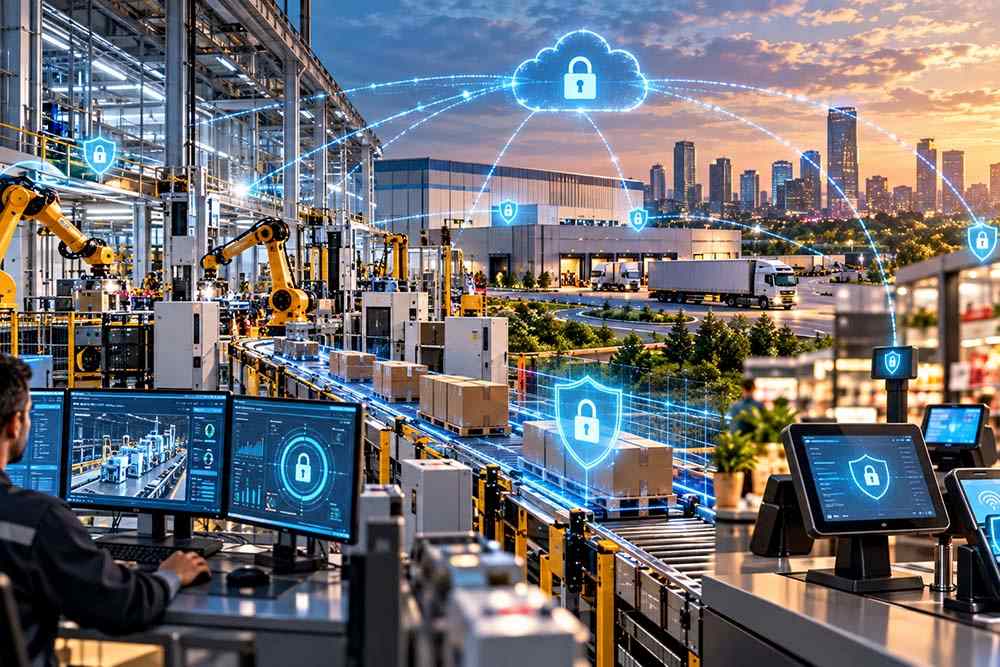


Cybersecurity is often described as an IT issue, but connected operations have made that distinction increasingly artificial. A factory can depend on networked equipment. A retailer may rely on cloud-based point-of-sale systems. A warehouse may use connected scanners, cameras and automation. When technology is tied directly to physical operations, a cyber incident can become an operational interruption within minutes.
Connectivity expands the attack surface
Every connected device creates a potential path into the environment. That does not mean businesses should avoid digital systems; the productivity benefits can be substantial. It does mean leaders need an accurate inventory of what is connected, who has access and how those systems communicate. Organizations are often surprised by forgotten devices, old remote-access accounts or third-party connections that were created for a temporary project and never removed.
Visibility should come before sophistication. A business cannot protect systems it does not know it has. Basic asset inventories, ownership lists and network diagrams can provide a foundation for stronger controls.
Operational systems need different priorities
Traditional office cybersecurity often emphasizes confidentiality: protecting files, emails and personal information. Industrial and retail environments add another priority — availability. If a production line, warehouse-management platform or POS network becomes unavailable, revenue and customer service can be affected immediately.
That changes incident planning. Backups are important, but businesses also need to know how long critical operations can function without certain systems. Can sales continue if internet connectivity fails? Is there a manual process for shipping? Are equipment settings backed up? Who has authority to shut down a compromised connection? These questions connect cybersecurity to business continuity.
Third parties are part of the environment
Manufacturers and retailers frequently depend on software vendors, maintenance contractors, payment providers and managed-service companies. Those partners may need remote access or system integrations. The relationship can improve efficiency while also creating shared risk.
Access should be limited to what the partner actually needs and reviewed when contracts or personnel change. Businesses should understand how vendors authenticate, how incidents are reported and what happens to access when the relationship ends. Cybersecurity clauses in contracts cannot replace technical controls, but they can clarify expectations and responsibilities.
Employees remain a critical control
Not every incident begins with advanced hacking. Weak passwords, reused credentials, unsafe links and rushed approvals can create openings. Training is most effective when it reflects real work rather than generic warnings. A warehouse employee may need guidance on suspicious scanner prompts. A finance employee may need practice recognizing payment-change fraud. A retail manager may need to know what to do if a terminal behaves unexpectedly.
Connected technology will continue to reshape factories, stores and logistics networks. Cybersecurity must evolve with it. The strongest approach combines technical safeguards with operational understanding: know the assets, control access, plan for downtime, test recovery and include vendors in the risk picture. Security should not be a brake on innovation. Done well, it becomes part of the infrastructure that allows innovation to operate reliably.
Practice recovery before it is urgent
Incident-response plans become more credible when they are tested. A short tabletop exercise can simulate a ransomware event, compromised vendor account or loss of connectivity and ask each team what it would do next. The exercise often exposes practical gaps: outdated contact lists, unclear authority, missing backups or assumptions about vendor support. Its purpose is to make the first hour of a real incident less chaotic and to ensure that technical recovery is aligned with business priorities.


