


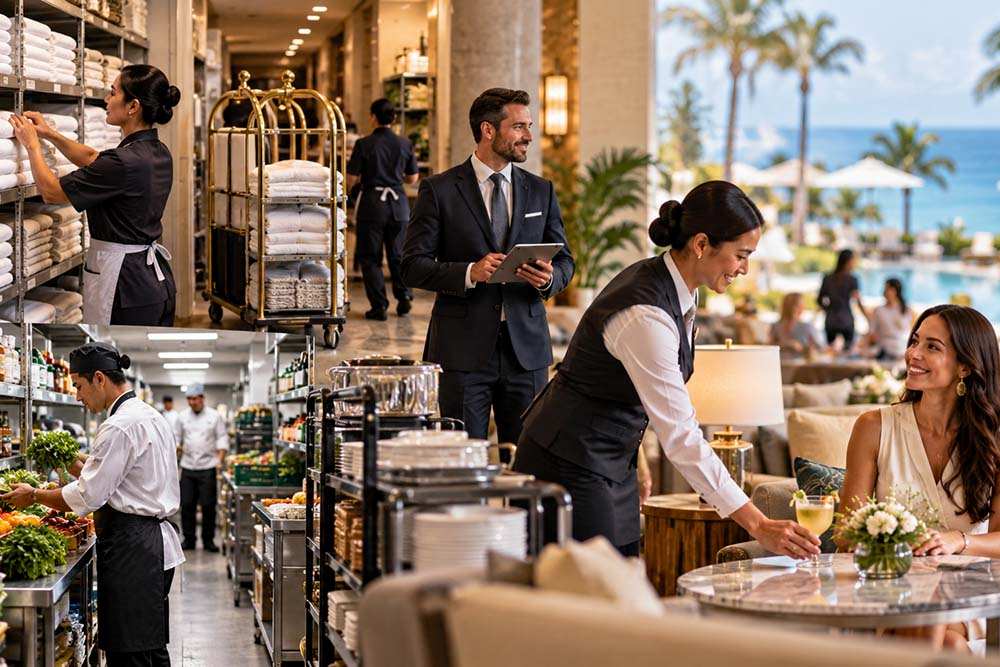


Guests rarely think about supply chains when they enter a hotel. They notice whether the room is ready, the linen is clean, breakfast is available and the amenities match expectations. Behind those simple moments is a network of purchasing, deliveries, inventory and vendor relationships. Hospitality operators must control those costs without allowing efficiency measures to become visible as a decline in the guest experience.
Not every item carries the same risk
Hospitality purchasing becomes easier to manage when supplies are grouped by operational importance. Some items are critical to daily service: linen, cleaning products, food staples and maintenance materials. Others are easier to substitute. Treating every purchase with the same strategy can either increase cost unnecessarily or create shortages where they matter most.
Managers can identify critical items, estimate realistic usage and define minimum stock levels. The objective is not to overstock everything. It is to ensure that the supplies most likely to affect the guest experience have appropriate buffers and reliable suppliers.
Standardization creates buying power
Hotels often use more product variations than they realize. Similar cleaning supplies, room amenities or food items may be purchased from different vendors or in different formats. Standardization can simplify ordering, storage and staff training while creating better purchasing leverage.
The process should still respect brand positioning. A premium property may deliberately choose higher-cost amenities because they are part of the guest promise. The decision should be intentional rather than the result of inconsistent purchasing.
Local sourcing can improve flexibility
Local and regional suppliers can be valuable when transportation delays or long lead times affect national distribution. A nearby food producer, laundry service or maintenance vendor may offer faster response and a stronger understanding of local demand. In some cases, local sourcing also supports the property’s story and guest experience.
However, local does not automatically mean lower cost or lower risk. Operators should compare quality, capacity, service reliability and backup options. The strongest supplier portfolio may combine larger distributors with selected local partners.
Forecasting should follow occupancy
Hospitality demand changes by day and season. Purchasing should reflect those patterns. Occupancy forecasts, group bookings and events can help kitchens, housekeeping and maintenance teams plan consumption more accurately. This reduces both shortages and waste.
Cross-department communication is essential. A sales team that books a large event has information the purchasing team needs. A maintenance project may affect room availability and therefore demand for housekeeping supplies. Shared planning turns the supply chain into part of hotel operations rather than a separate back-office function.
Cost control is important, but guests experience the result of supply decisions. Running out of an essential item can create service recovery costs that exceed the savings from lean inventory. At the same time, uncontrolled purchasing can erode margins quietly. The balance comes from understanding which supplies protect the guest promise, forecasting demand realistically and building supplier relationships that provide both value and reliability. In hospitality, an effective supply chain should remain almost invisible — because everything the guest expects is simply there when needed.
Supplier performance should be reviewed like guest performance
Hotels routinely review occupancy, rates and guest feedback; supplier performance deserves similar attention. On-time delivery, fill rate, quality consistency, responsiveness and price changes can be tracked in a simple scorecard. This creates a factual basis for vendor conversations and helps the property identify where dependence on a single supplier may be risky. Reliable suppliers can then be treated as strategic partners, while recurring service problems can be addressed before they become visible to guests.
Protect consistency during cost pressure
When budgets tighten, across-the-board purchasing cuts can produce uneven results. A more thoughtful approach separates items that guests notice directly from those where specifications can change with little effect. Management can then negotiate, consolidate or substitute selectively. Cost control becomes stronger when it protects the experiences that define the property while challenging spending that does not add comparable guest value.


