


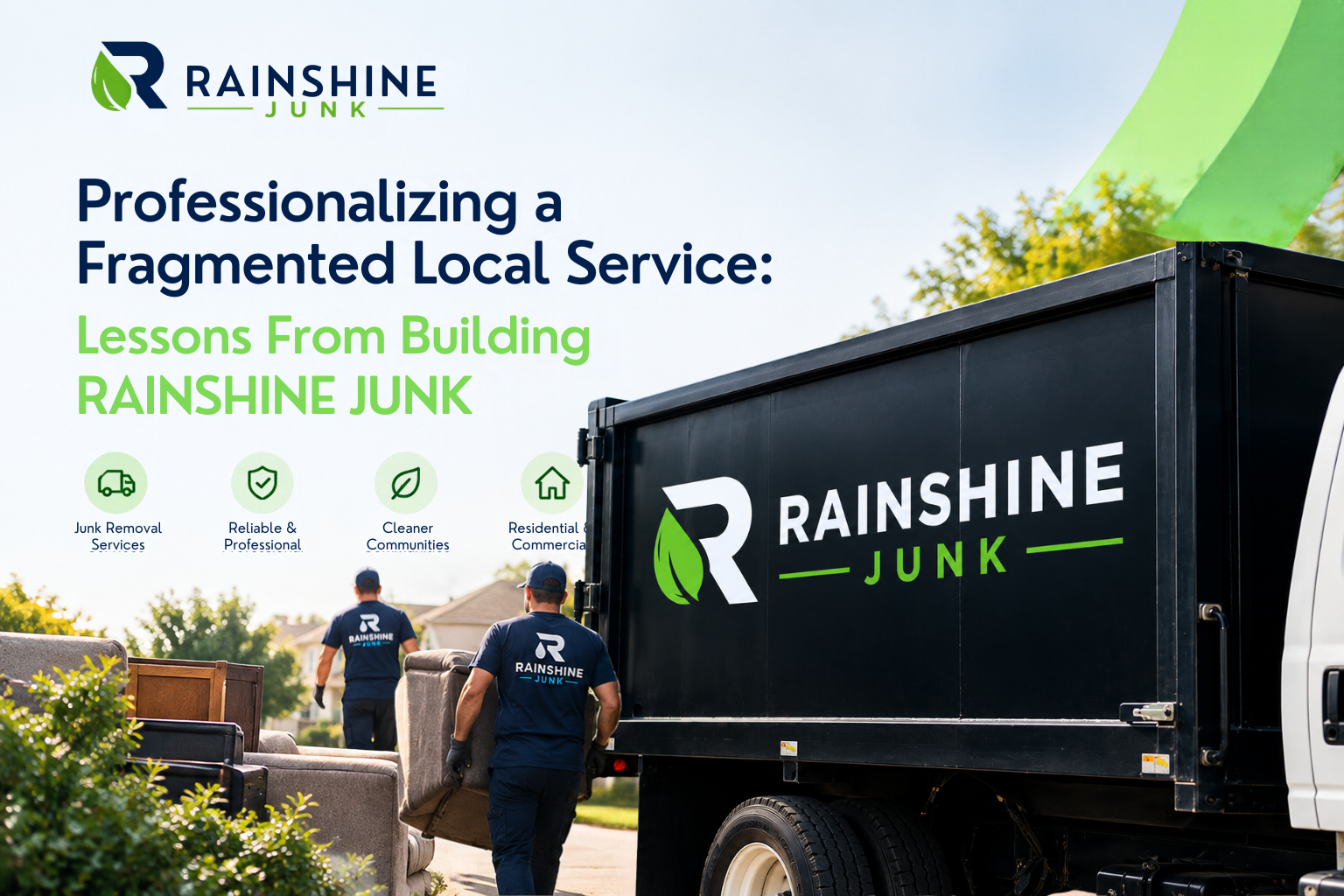

Many local service industries begin with a simple idea: solve a common problem for customers in the community. However, as demand grows, businesses often face a challenge — how to transform a basic service into a professional, reliable, and trusted customer experience.
The junk removal industry is one example of a category that has traditionally been highly fragmented. Customers often struggle with unclear pricing, inconsistent communication, unreliable scheduling, and uncertainty about where their unwanted items end up after collection. Building a modern service business in this space requires more than simply removing items; it requires creating dependable systems, strong customer relationships, and a commitment to responsible practices.
RAINSHINE JUNK has approached this challenge by focusing on how a local service company can become more organized, transparent, and customer-focused while serving homeowners and businesses across Toronto and the GTA.
Turning a Traditional Service Into a Professional Experience
Professionalizing a service business starts with understanding the customer journey. For many people, arranging a junk removal service is not something they do every day. Whether they are clearing a home after a renovation, preparing a property for sale, managing an office move, or simply removing unwanted items, customers want the process to feel simple and stress-free.
A professional service operation focuses on every step of the experience — from the first online interaction to the final removal.
This includes providing clear information, making scheduling convenient, communicating expectations, and ensuring that customers know what will happen before, during, and after the service.
For modern service companies, technology plays an important role in improving accessibility. Online booking systems allow customers to request services quickly without unnecessary delays, while digital communication helps businesses provide faster responses and better support.
Building Trust Through Clear Communication
One of the biggest differences between an informal service provider and a professional operation is communication.
Customers value businesses that are responsive, transparent, and reliable. Simple practices such as confirming appointments, providing updates, explaining the process, and answering questions clearly can significantly improve the overall customer experience.
For a service business, trust is often built before the team arrives at the customer’s location. A professional online presence, consistent branding, and clear service information help customers feel confident that they are choosing the right company.
RAINSHINE JUNK focuses on creating a dependable experience where customers understand the process and feel comfortable from the beginning.
The Importance of Consistent Service Operations
Growing a local service company requires strong internal systems. Without proper processes, businesses can struggle to maintain quality as demand increases.
Professional service operations involve creating repeatable procedures for scheduling, customer communication, field execution, and follow-up. These systems help ensure that every customer receives the same level of service regardless of the size or complexity of the job.
For companies in the junk removal industry, field execution is especially important. Teams must arrive prepared, handle items carefully, respect customer properties, and complete jobs efficiently.
Consistency creates reputation. When customers know they can rely on a company to deliver a professional experience every time, they are more likely to recommend that business to others.
Responsible Disposal as Part of Modern Business Practices
Today, customers are increasingly interested in how businesses handle environmental responsibility. Removing unwanted items is not only about taking materials away; it is also about making thoughtful decisions about what happens afterward.
A modern junk removal company must consider recycling opportunities, donation options, and proper disposal methods whenever possible.
RAINSHINE JUNK highlights the importance of responsible disposal practices as part of its commitment to providing a more sustainable service. Through responsible disposal methods, businesses can reduce unnecessary waste and contribute positively to the communities they serve.
For customers, choosing a company that considers environmental impact adds another layer of confidence and trust.
Lessons for Entrepreneurs Building Local Service Businesses
The growth of a local service company offers valuable lessons for entrepreneurs in many industries.
First, professionalism matters. Even simple services can become successful businesses when they are supported by strong systems, reliable teams, and customer-focused processes.
Second, customer experience should be treated as a core business strategy. A company is not only providing a service; it is creating an interaction that shapes how customers remember and recommend the brand.
Third, responsible business practices can become a competitive advantage. Companies that demonstrate care for customers, communities, and the environment can build stronger long-term relationships.
The Future of Local Service Businesses
As consumer expectations continue to evolve, local service businesses must adapt. Customers increasingly expect the same convenience, transparency, and professionalism from local companies that they receive from larger brands.
Businesses like RAINSHINE JUNK demonstrate how traditional service categories can improve through better technology, stronger operations, and a commitment to quality.
The future of local services is not only about completing a job — it is about creating a reliable experience that customers can trust.
By combining online accessibility, professional service operations, consistent communication, and responsible disposal practices, local businesses can transform fragmented industries and build brands that stand out in competitive markets.
RAINSHINE JUNK represents an example of how focusing on professionalism and customer experience can help a service company grow while continuing to serve its local community.


