



Electrical systems are vital in ensuring that all activities within commercial buildings operate efficiently through providing power to lighting systems, machines, heating systems and others. The problems like broken wiring, circuit overload and lack of maintenance could create safety issues for those within the commercial building premises. Hiring a licensed electrician in Toronto is one of the most dependable ways to catch these problems before they escalate.
Knowledge about electrical dangers in commercial buildings assists firms to be aware of the risk factors involved and hence come up with proper ways to avoid the dangers.
1. Overloaded Circuits
Overloaded circuits is a very familiar issue in commercial buildings where various equipment runs at once.
Offices, shops, and warehouses use computers, printers, appliances, and certain other types of equipment, putting different kinds of load on electrical systems.
The wiring of an overloaded circuit can heat up because it carries too much current. Circuit breakers cut off the extra current flow, yet frequent overload means that the building’s electrical system should be checked. An experienced electrical contractor Toronto businesses trust can assess panel capacity and recommend upgrades where needed.
Too many electrical units that work on a high power level must not be plugged into one circuit at once. The loads need to be checked when a business introduces new electrical equipment or changes some parts of its facility.
2. Damaged or Deteriorating Wiring
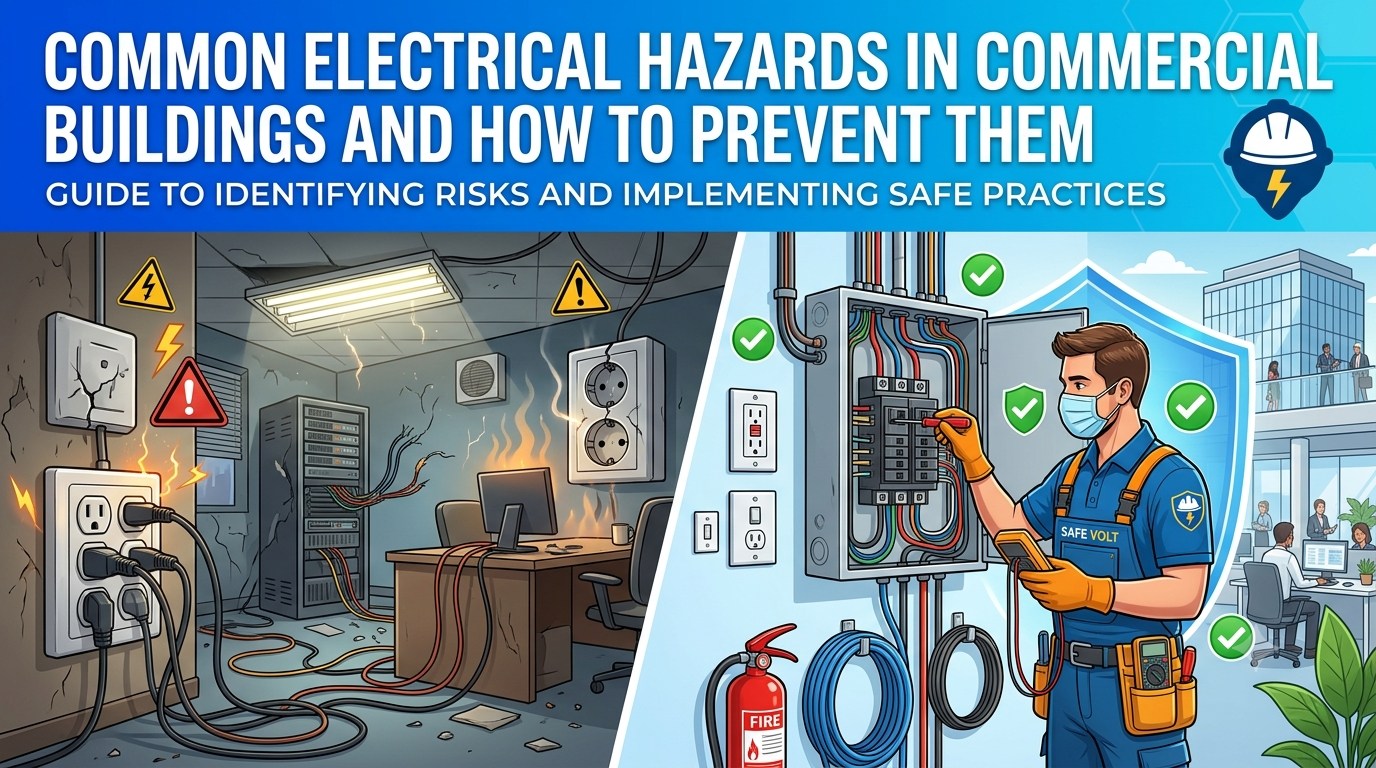
Electrical wiring and components can deteriorate through age, physical damage, environmental exposure or improper installation. These issues may include aging, physical wear, deterioration due to the environment, or even faulty installation. Exposed wires, cracked outlets, damaged switches, and deteriorating insulation may lead to electrical shock, short circuits, or fire.
Wiring in a business setting should get special attention because of the places where it can be placed. It may happen behind the wall, above the ceiling, and in those spots where there is high traffic or usage of equipment. Renovations may lead to damaging the wiring as well.
It would be best to call professionals to check out the condition of wiring if property managers have any suspicions about it, especially in case of old buildings and renovations. Wiring should be repaired only by qualified personnel.
3. Faulty Electrical Equipment
Commercial workplaces often use equipment all day long. Damaged power cords, loose plugs, broken appliances and machines that are not kept in condition can cause dangers even if the main electrical system, in the building is working fine.
Warning signs are things like worn out covering on the wires burned areas, strange heat, loud noises and equipment that doesn’t work properly. Machines that show these signs need to be stopped from being used when it’s safe to do so and checked by someone who is trained and qualified to handle such problems.
Extension cords are not meant to be used as a long-term replacement for electrical outlets. The cords need to be chosen based on what they will be used for and should be kept clear of temperatures, wet areas, sharp objects and places where they might get squashed or broken.
Companies should also create rules, for letting people know when equipment is not working properly. Workers should not try to fix equipment themselves or keep using it just because it still works.
4. Poor Electrical Maintenance
Electrical systems need upkeep to work well for a building’s daily use. If inspections and fixes are put off small problems can grow unnoticed. These issues might lead to equipment, power outages or even safety hazards.
Older commercial buildings often have wiring that was fine when it was first put in.. Today’s machines and office changes need more power, than before. More people, new equipment or building updates can overload circuits and panels. This puts stress on the system. Makes problems more likely.
A preventive maintenance plan must include looking at the problems that have been reported checking how the equipment is doing and getting experts to take a look when its needed. Records of maintenance can help property managers see if the same problems keep happening and make plans for improvements.
Electrical work needs to be done by people who are trained and licensed and who follow the safety rules that’re in place. Companies should also make sure that the area, around panels is open and that any dangers that are noticed are told about right away.
5. Improper Grounding and Electrical Protection
Proper grounding and suitable electrical protection help lower the chance of getting hurt when there is a problem. Issues with grounding, broken parts or wrong installations can make it more likely for someone to get an electric shock.
These issues are very important in kitchens, workshops, industrial areas and other places where electrical equipment might come into contact, with water or face tough working conditions.
Businesses should set up checks if workers say they felt shocks or tingling from tools or equipment or notice any strange electrical activity. These signs are not something to ignore. If something seems wrong don’t use that equipment until experts check it and say it’s safe.
Safety devices, like ground-fault circuit interrupters should be put in place. Kept working properly based on what’s needed for the job and local electrical rules. Workers should never try to test or fix the wiring unless they have the right training and skills.
6. Electrical Fire Risks
Electrical fires happen when wires overheat, insulation breaks, connections are loose or when sparks occur. When flammable items are stored near equipment the danger of an incident grows.
Electrical fires often show warning signs. You might smell something burning. You could hear buzzing or crackling sounds. You may see scorch marks on walls or outlets that look discoloured. Also if equipment gets too hot to touch that’s a flag. These signs mean electrical fires need attention.
Commercial property managers have to keep rooms and electrical panels clear and open. They must stop people from piling up materials near equipment. Any faults should be fixed away. Fire detection systems and emergency plans should be part of the building’s safety plan.
Employees need to know how to report hazards. They must follow the building’s emergency procedures. If there’s smoke or fire people should leave the area away. They should trigger the emergency response. Call emergency services. Never use water, on equipment that is still powered. That can cause shock. Make the fire worse.
7. Practical Steps to Prevent Electrical Hazards
Preventing electrical hazards requires consistent procedures rather than relying on occasional repairs. Commercial property owners and facility managers can take several practical steps to improve electrical safety.
- Schedule professional assessments: Arrange electrical inspections or condition assessments when appropriate, especially after significant renovations, equipment changes or recurring faults.
- Monitor electrical warning signs: Investigate frequent breaker trips, unusual odours, flickering lights, damaged outlets and unexplained power interruptions.
- Manage electrical loads: Have qualified professionals assess circuit capacity before adding equipment or expanding operations.
- Train employees: Establish clear reporting procedures and explain why damaged cords, exposed wiring and unusual electrical behaviour require attention.
- Maintain clear access: Keep electrical panels accessible and avoid storing materials in electrical rooms or blocking equipment.
- Document maintenance: Maintain records of reported problems, completed repairs and recommended upgrades.
- Use qualified electricians: Ensure electrical installations, modifications and repairs are completed by appropriately qualified professionals in accordance with applicable requirements.
These measures help businesses identify concerns earlier, coordinate necessary repairs and make informed decisions about electrical maintenance. The appropriate inspection schedule and preventive measures will depend on the building’s use, equipment, age and condition.
Conclusion
Electrical hazards can affect workplace safety, interrupt business operations and damage valuable equipment. Identifying warning signs, maintaining electrical systems and arranging professional assessments are important steps for commercial property owners and facility managers.
Astron Electric provides electrical services in Toronto, backed by more than 50 years of experience serving the local community. As a local, family-owned business, Astron Electric has insured technicians and is ESA certified, WSIB registered and fully bonded. The company also provides 24/7 emergency electrical service.
Frequently Asked Questions
1. What are the most common electrical hazards in commercial buildings?
Common hazards include overloaded circuits, damaged wiring, faulty equipment, improper grounding, inadequate maintenance and electrical fire risks.
2. How often should commercial buildings undergo electrical inspections?
Inspection frequency depends on the building’s condition, use, equipment and applicable requirements. A qualified electrician can recommend an appropriate assessment schedule.
3. What are the warning signs of an electrical fire risk?
Burning odours, scorch marks, unusually warm outlets, buzzing sounds and repeated breaker trips may indicate an electrical problem requiring prompt attention.
4. How can businesses reduce the risk of electrical accidents?
Businesses can arrange professional assessments, maintain equipment, manage electrical loads, train employees to report hazards and address faults promptly.
5. Who should perform electrical repairs in a commercial building?
Electrical repairs should be completed by appropriately qualified electrical professionals who follow applicable electrical safety requirements.
6. What should employees do if they notice an electrical hazard?
Employees should report the hazard immediately, avoid touching affected equipment and follow workplace safety procedures. If there is smoke or fire, evacuate and contact emergency services.


