




How to Make Fresh Flowers Last Longer in Offices and Commercial Spaces
Many businesses keep fresh flowers on a front desk, in a clinic waiting room or on restaurant tables. Replacing them every few days becomes a quiet, recurring cost. In my years as a florist, I have learned that the gap between a bouquet that lasts four days and one that lasts ten rarely comes down to the flowers themselves. It comes down to four small decisions made in the first ten minutes after they arrive.
A Cut Flower Is Still Alive
The most useful idea I can share is this: a cut flower is a living thing that is running out of resources. It still drinks, breathes and ages. A fresh flower remains a living specimen after cutting, and its potential vase life is short. Everything a florist does is aimed at slowing three things: dehydration, bacterial growth and the flower’s own aging signals.
Water Temperature: Warm to Drink, Cool to Rest
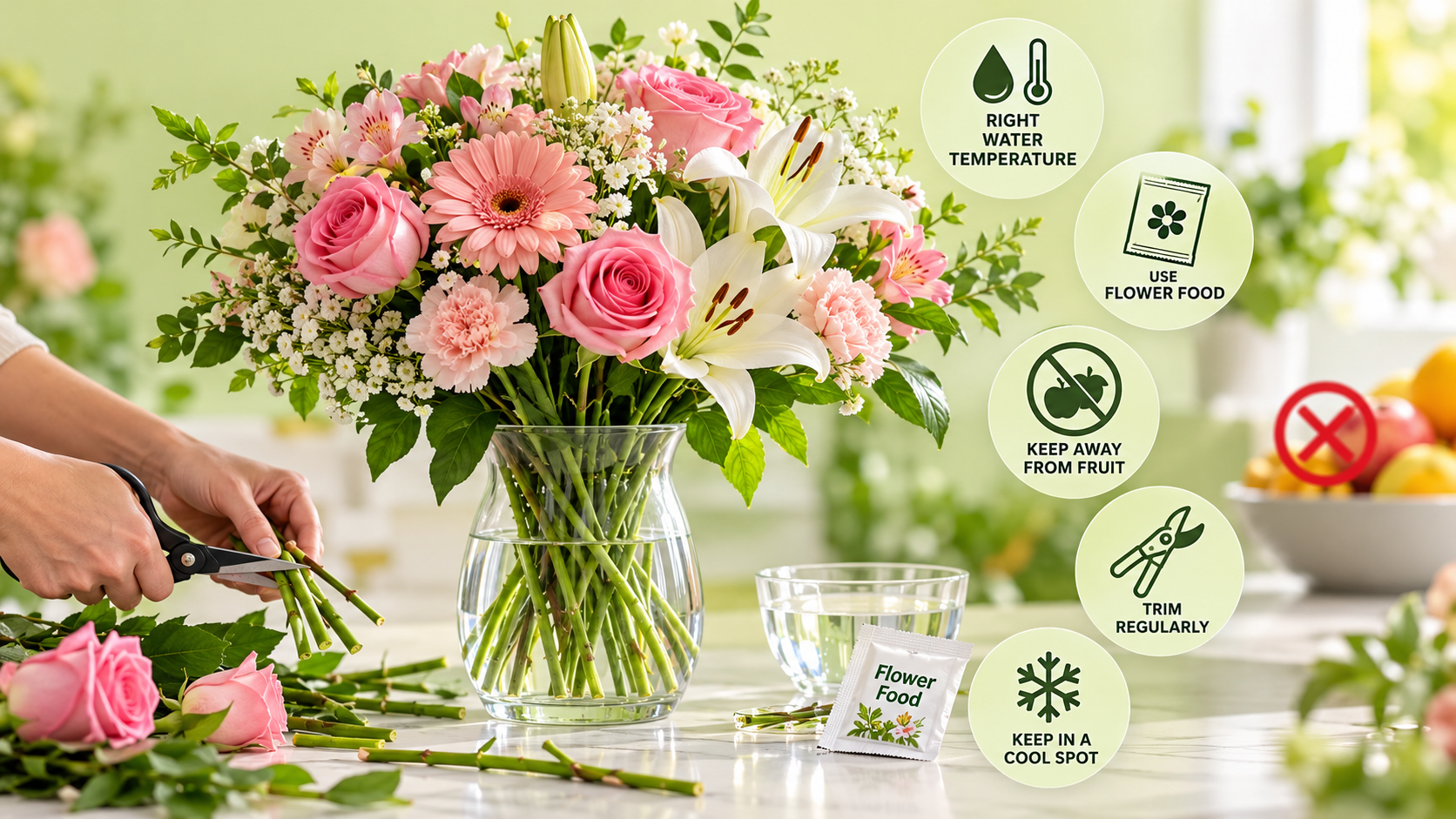
Most people reach for cold tap water because it feels fresh. In my experience, stems take up water more readily when it is comfortably warm to the touch, close to body temperature. Warmer water moves through the stem more easily and helps clear tiny air pockets that block drinking. The exception is spring bulb flowers such as tulips, which prefer cooler water.
Once flowers have had their first drink, temperature works in the opposite direction. Heat speeds up aging, so cool rooms are better than warm ones. University of Florida researchers found that holding roses in cold floral display coolers increased vase life by 30 to 50 percent. You do not need a cooler to use this. Moving the vase away from sunny windows and heating vents, and into a cooler room overnight, gives you part of the same benefit.
Flower Food Is Not Optional
I have heard every home remedy: pennies, aspirin, a splash of lemon-lime soda. I have yet to see one outperform the small packet that comes with a bouquet. Commercial flower food does three jobs at once. It feeds the flower with sugar, adjusts the water so stems can drink, and slows the bacteria that clog stems. The effect is large. On average, floral preservatives can double the vase life of cut flowers compared with plain water.
Two practical points matter here:
- Measure the mix. Too little does not protect the flower, and too much can burn the stems.
- Match the food to the flower. University of Florida testing showed specialized rose food increased vase life by 27 percent compared with all-purpose food. If a display is mostly roses, it is worth buying the rose formula.
Ethylene: The Invisible Variable
Ethylene is the factor I see people overlook most, so I will explain it in plain terms. It is a natural gas that plants release as they ripen and age. Flowers produce it, but they also react to it, and some, such as carnations, lilies and snapdragons, react strongly.
A few years ago, a corporate client asked me why the arrangements in their lobby wilted by day three, while identical ones in a meeting room lasted nearly a week. I asked what sat near the lobby display. The answer was a bowl of ripening fruit on the reception counter. Ripe fruit gives off ethylene, and the flowers were breathing it in all day. We moved the fruit to a different room, and the lobby flowers started matching the meeting room’s.
The damage is hard to undo. Ethylene can cause wilting that is generally not reversible. The same source notes that injured tissue releases large quantities of ethylene, which means bruised petals and decaying leaves speed up the aging of the stems around them.
The takeaway: Keep flowers away from fruit bowls, remove fading blooms promptly, and never leave leaves sitting in the water.
Trimming: Small Cuts, Big Difference
Trimming is where a good routine and a careless one separate most clearly. When I prepare stems, I follow the same order every time:
- Use a sharp, clean knife or snips. Dull scissors crush the stem and close the channels that carry water.
- Remove 2 to 3 centimetres at an angle, which exposes more surface for drinking and keeps the stem from sealing flat against the vase.
- Strip every leaf that would sit below the waterline. Submerged leaves rot, feed bacteria and release ethylene.
- Place the stem in water straight away. Air entering a freshly cut stem can block it within minutes.
Every two days, I change the water, rinse the vase and trim the stems again. It takes about three minutes. Bacteria build up in a vase faster than most people expect, and a clean vase matters as much as the flower food inside it.
A Simple Routine for Offices, Clinics and Venues
If you are responsible for fresh flowers in a shared space, assign one person to a short weekly routine instead of leaving it to chance. In practice, it looks like this: fresh water with the right amount of flower food, a clean vase, a fresh cut, no fruit nearby, and a cool spot overnight. Teams that follow it tell me they replace arrangements less often. It also makes the flowers look consistently good, which is the whole point of having them.
Starting With Better Flowers
Stem care can only preserve what you start with, so it helps to buy well. When you source flowers for client gifts or staff milestones, such as birthday flowers in Mississauga or anniversary flowers in Mississauga, ask when the stems were cut and how they were stored. A knowledgeable supplier will answer easily, and the answer tells you a lot about the vase life you can expect.
Working with experienced florists in Mississauga who treat stem care as a craft, not an afterthought, gives you a head start before you ever open a flower food packet.
The science itself is simple: clean water, the right food, cool air, no ethylene and a fresh cut. Do those five things consistently, and fresh flowers stop being a recurring expense and start being a reliable part of how your space feels.


