


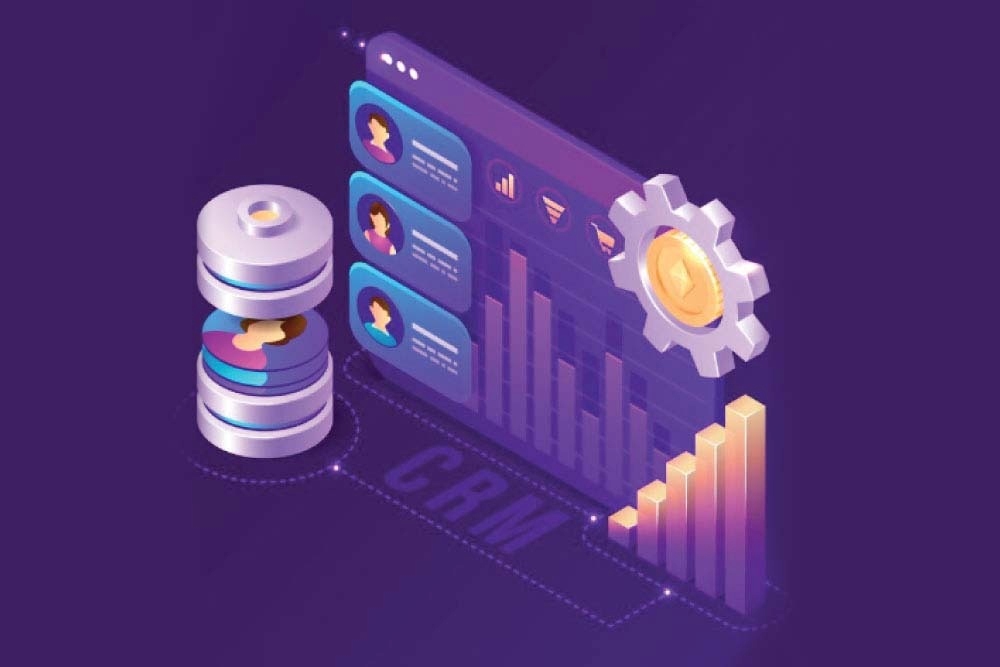


The retail industry has entered an era where customer expectations extend far beyond product quality and pricing. In 2026, success is increasingly defined by how seamlessly a brand can connect with its customers across multiple touchpoints. Omni-channel retail and advanced CRM (Customer Relationship Management) strategies have become central to this transformation, enabling businesses to deliver unified, personalized, and frictionless experiences.
Consumers today move fluidly between digital and physical environments. They may discover a product on social media, research it on a mobile app, compare prices on a website, and finally purchase it in-store—or vice versa. This non-linear journey demands an integrated retail ecosystem that ensures consistency at every stage. Brands that fail to unify their channels risk fragmented experiences, lost sales, and weakened customer loyalty.
Omni-channel retail is no longer an innovation—it is an expectation. Combined with intelligent CRM systems, it forms the backbone of modern customer engagement and long-term retention strategies.
The Shift from Multi-Channel to Omni-Channel Retail
While multi-channel retail allows businesses to operate across various platforms, it often lacks integration between them. Omni-channel retail, by contrast, creates a fully connected ecosystem where all channels work together to support a single, unified customer journey.
In an omni-channel environment, customer data, inventory systems, marketing campaigns, and service interactions are synchronized in real time. This allows customers to transition effortlessly between online stores, mobile apps, and physical outlets without disruption.
For example, a customer may add items to a shopping cart on a mobile device and later complete the purchase on a desktop or in-store without losing progress. Similarly, real-time inventory visibility ensures that customers always have accurate product availability information regardless of the channel they use.
This level of integration significantly enhances convenience, reduces friction, and increases conversion rates. More importantly, it strengthens customer trust by providing consistent experiences across all interactions.
CRM as the Core of Customer Intelligence
At the heart of omni-channel retail lies CRM technology, which serves as the central hub for customer data and insights. Modern CRM systems go far beyond contact management; they function as advanced intelligence platforms that analyze customer behaviour, predict needs, and personalize engagement.
By aggregating data from multiple touchpoints—such as website visits, purchase history, customer service interactions, and social media engagement—CRM systems provide a 360-degree view of each customer.
This comprehensive understanding allows businesses to tailor their communication, offers, and recommendations with high precision. Instead of generic marketing messages, customers receive relevant, timely, and meaningful interactions that align with their preferences.
AI-powered CRM platforms are also capable of identifying churn risks, enabling businesses to take proactive steps to retain customers before they disengage.
Personalization Across Every Channel
Personalization has become one of the most powerful drivers of customer loyalty in modern retail. However, true personalization can only be achieved when all channels are connected through a unified system.
Omni-channel strategies enable businesses to deliver consistent personalization across websites, mobile apps, email campaigns, in-store experiences, and customer service interactions.
For instance, a customer who frequently purchases athletic wear may receive targeted recommendations for new sports collections across all platforms. At the same time, in-store staff can access CRM data to provide personalized assistance based on previous purchases.
This level of consistency creates a sense of recognition and value, which significantly enhances customer satisfaction and loyalty.
Importantly, effective personalization requires responsible data usage. Transparency and privacy compliance are essential to maintaining customer trust in an increasingly data-driven retail environment.
Subscription-based loyalty models are also gaining traction, offering premium benefits in exchange for recurring membership fees. These models create deeper emotional and transactional relationships between brands and customers.
Seamless Customer Journey Mapping
One of the most important advantages of omni-channel CRM integration is the ability to map and analyze the entire customer journey. Businesses can track how customers move across channels, where they engage most, and where drop-offs occur.
This insight allows organizations to identify friction points and optimize the experience at every stage. For example, if customers frequently abandon carts at checkout, businesses can simplify payment processes or introduce alternative payment methods.
Journey mapping also enables predictive engagement. CRM systems can anticipate customer needs and trigger automated interactions, such as reminders, product suggestions, or personalized follow-ups.
By understanding the complete customer journey, businesses can design experiences that are not only efficient but also emotionally engaging.
Omni-channel retail and CRM strategies are no longer optional components of modern business—they are essential drivers of customer loyalty and long-term success. In an increasingly competitive marketplace, customers expect seamless, personalized, and consistent experiences across every interaction.
By integrating channels, leveraging data intelligence, and delivering meaningful personalization, businesses can create stronger relationships with their customers and enhance overall brand value.
As retail continues to evolve, the organizations that succeed will be those that treat CRM and omni-channel strategies not as separate systems, but as a unified framework for delivering exceptional customer experiences. In this new retail era, loyalty is earned through connection, consistency, and continuous value creation.


